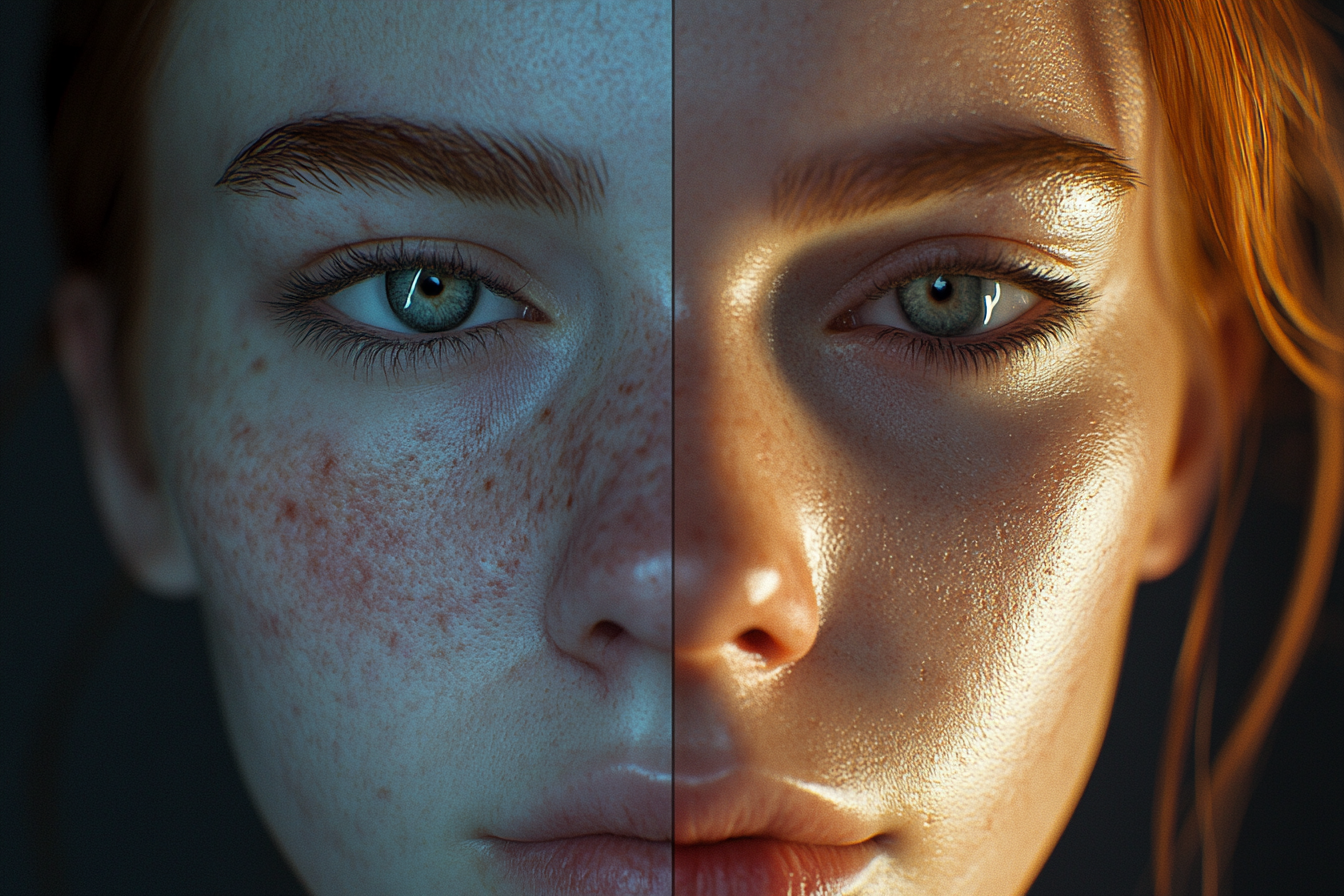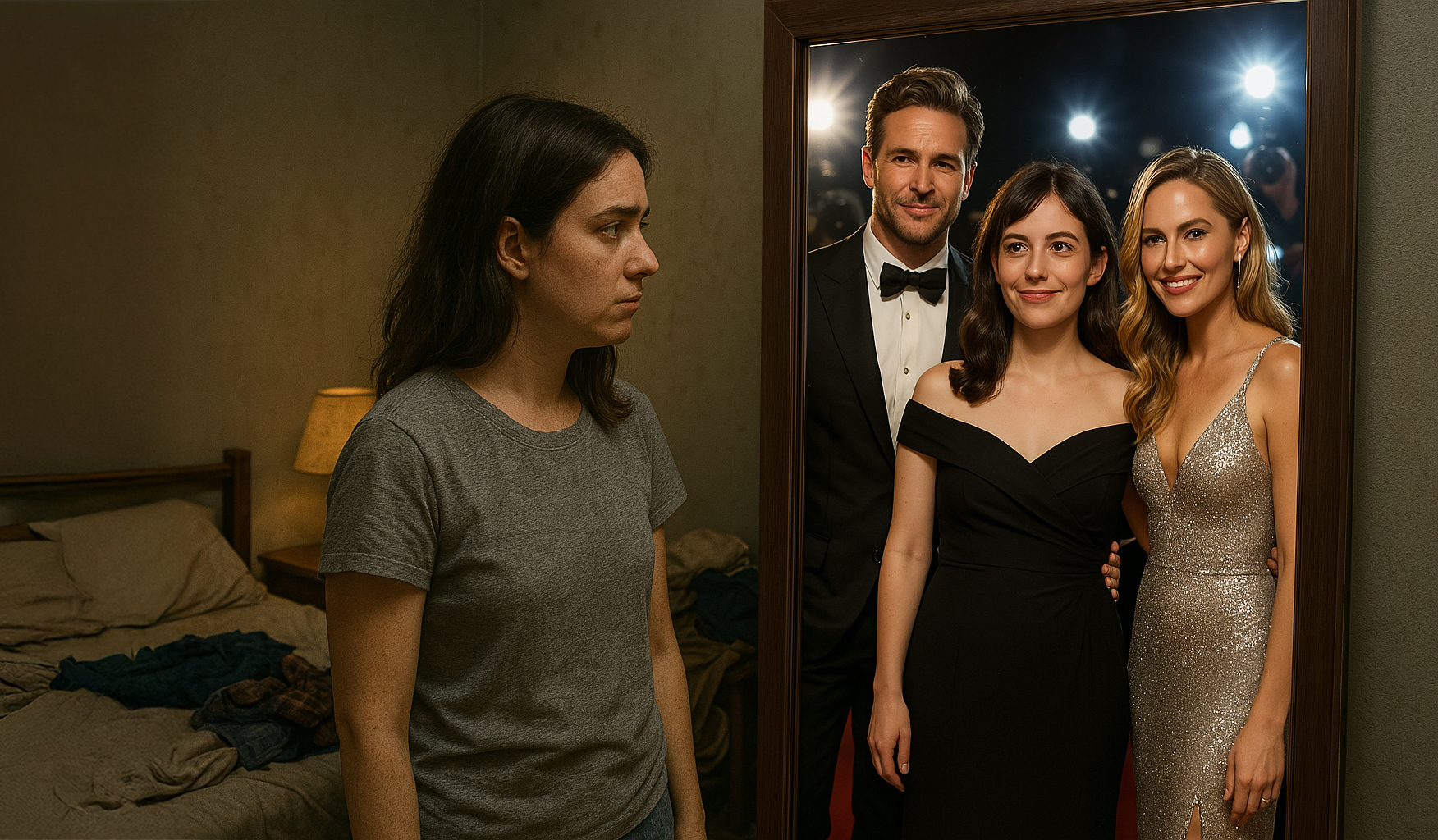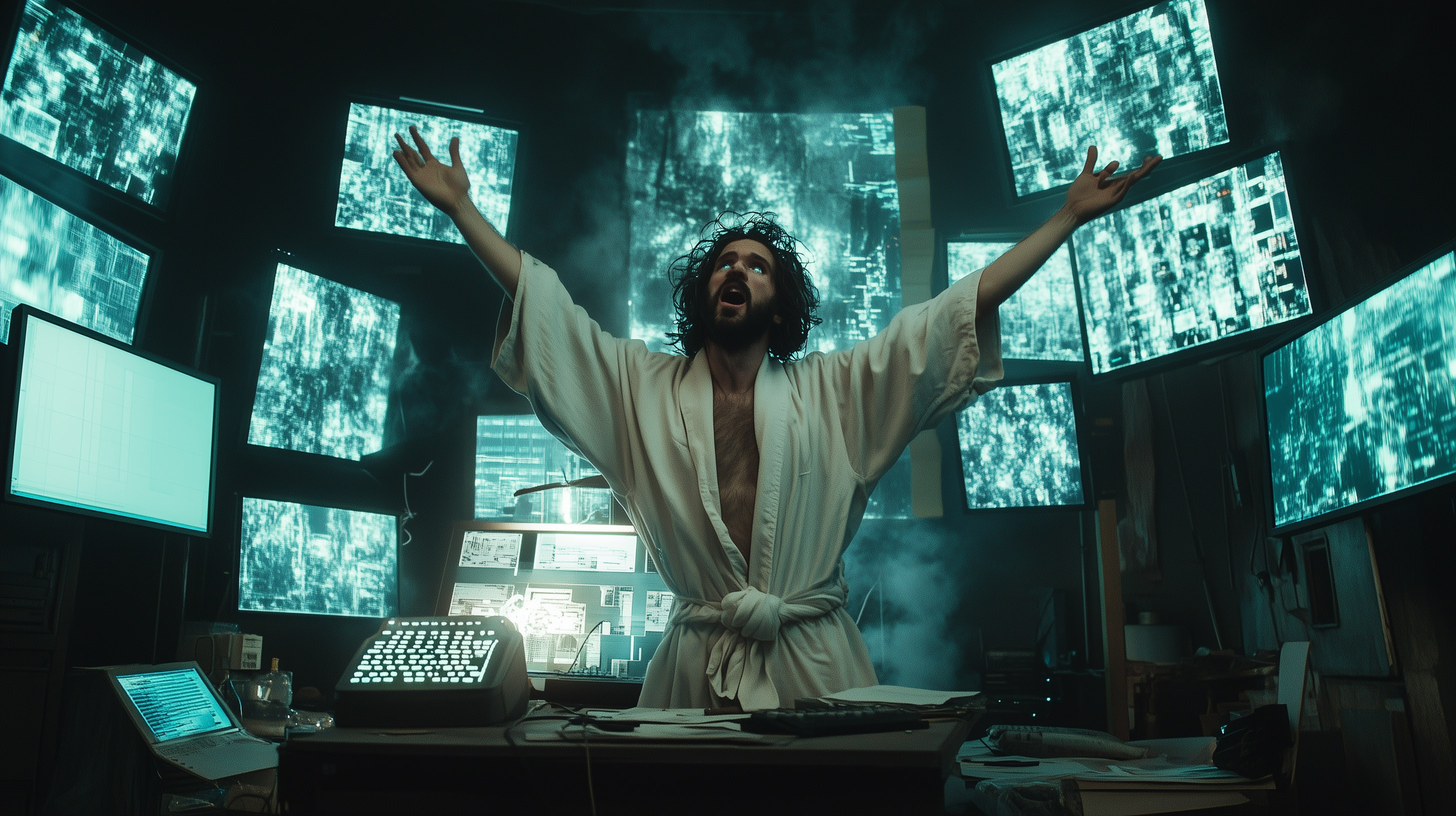

The strange new world of AI costume transformation, where pixels have replaced spandex and the human form can transform faster than a comic book quick-change artist on amphetamines
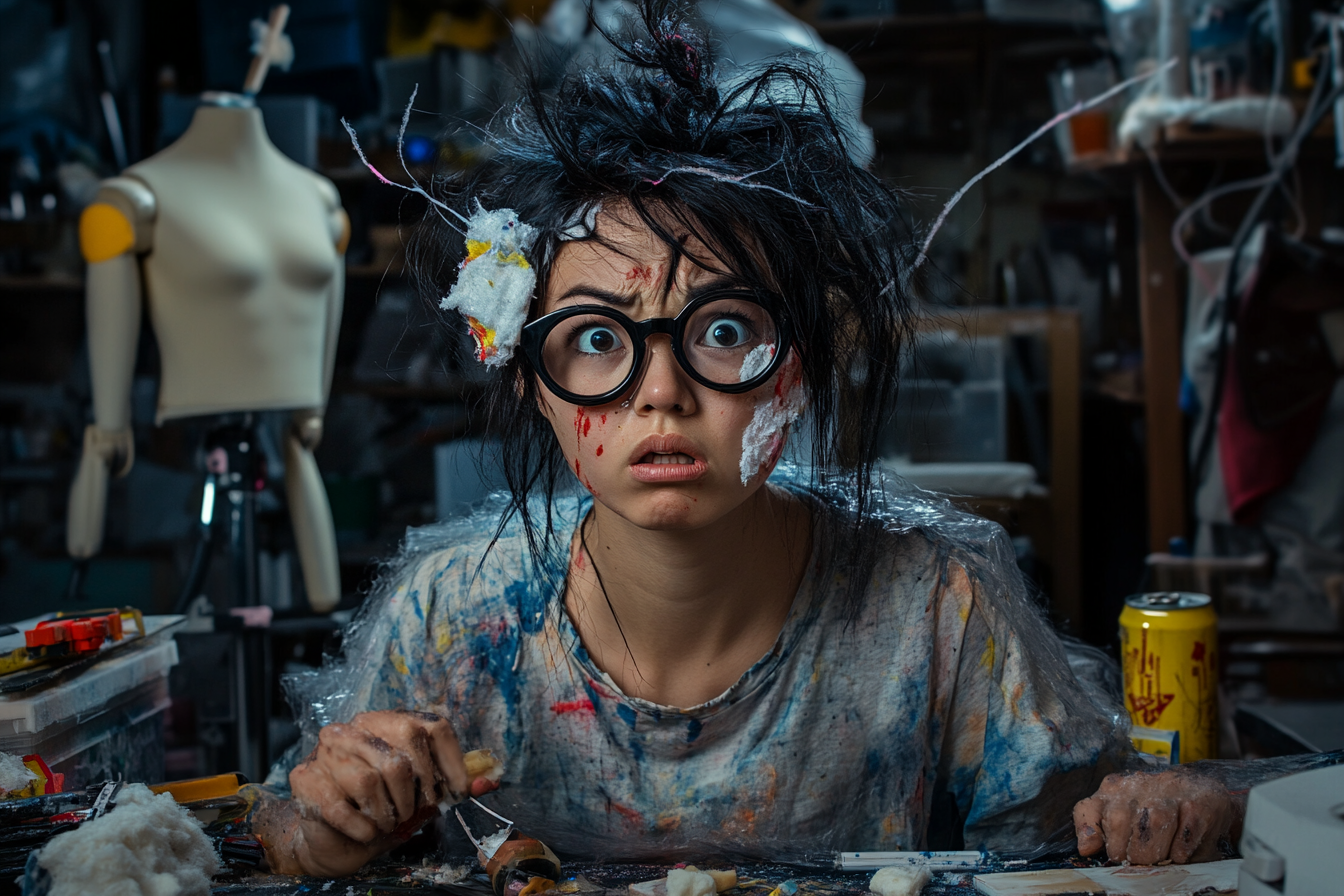
There was a time when becoming someone else required weeks of labor, hundreds of dollars in obscure craft supplies, and an inevitable 2 AM breakdown involving a hot glue gun and tears of frustration. The cosplay life was a beautiful madness—a deranged devotion to fictional characters that demanded blood, sweat, and an alarming percentage of your living space dedicated to foam scraps.
I've spent the past month interviewing these costume warriors as they grapple with a technological disruption that threatens to upend their craft like a rogue kaiju smashing through a cardboard cityscape: AI image generation. It's creating a new breed of digital cosplay addicts.
THE GATEWAY CHARACTER
"It started innocently enough," says Jamie, a veteran cosplayer with ten years of experience. We're sitting in her apartment workshop, surrounded by mannequins draped in half-finished creations and walls covered in foam templates.
"I was deep into my usual pre-convention panic spiral—three weeks out from Emerald City Comic Con with a half-finished Starlight costume that was becoming a monument to my hubris."
Her roommate showed her pictopia, an AI image generation app that could transform users into any character imaginable.
"I deleted the app three times that night before surrendering to curiosity," she admits. "The result wasn't crude. It was perfect—better than anything I could have created with my limited sewing skills and unlimited determination."
That night Jamie generated 347 images of herself as 42 different characters. She called in sick to work the next day.
THE COSTUME COLLECTOR'S HIGH
"I've created myself as 263 different characters in the past month," confesses Jess, nervously scrolling through a private Instagram account dedicated to her AI cosplays. "I've done every member of the X-Men. Every sailor scout. All the Targaryens. I'm working through the entire Final Fantasy franchise now."
The gallery on her phone is staggering—hundreds of flawless transformations that would have represented multiple lifetimes of traditional costume work.
"It's like the difference between climbing a mountain and seeing it in a really good VR simulation," she explains. "Part of me knows it's not the same. But another part of me is like... I can see ALL the mountains now, you know?"
The digital cosplay high comes not from the accomplishment of creation, but from the dizzying freedom of exploration without limits.
THE ECONOMICS OF DIGITAL DRESS-UP
"I spent $2,700 on my last Ironman build," says Marcus, a veteran cosplayer with a significant social media following. "That's not counting the three printers I burned through or the studio apartment I can barely afford because my previous place banned 'fire hazards' after my foam sealing process set off the alarms."
The economics are undeniable. A high-quality physical costume can cost hundreds or thousands of dollars. The AI version costs nothing but the time it takes to write a descriptive prompt.
"I'm actually making money now," admits Tyler, a college student who discovered pictopia three months ago. "People pay me to create custom prompts that turn them into specific characters. I charge $30 for basic transformations, more for complex ones with specific backgrounds or scenes."
Tyler—who once hot-glued his fingers together trying to attach a simple patch—is now a paid costume consultant in the digital realm.
THE CRAFT VERSUS CONCEPT DEBATE
"This isn't cosplay," insists Rebecca, a costume designer with 15 years of experience. "Cosplay is about the journey—the problem-solving, the mistakes, the community of makers helping each other. Pushing a button and having an AI create an image skips all of that. It's like comparing a microwave dinner to a feast you spent days preparing."
But on the other side are voices like Damon, a digital artist who has embraced AI cosplay with evangelical fervor.
"Cosplay has always been about transformation and expression," he argues. "The physical craft was just the only tool we had. Some people climb mountains because they love the climb. Others take helicopters to the top because they love the view. Both experiences are valid, just different."
THE UNEXPECTED BENEFITS
For all the debates, AI cosplay has brought unexpected benefits that even skeptics find difficult to dismiss.
"I use it as a prototype tool now," admits Kai, a professional costume designer who initially resisted the AI wave. "I can generate twenty different versions of a costume concept before cutting a single piece of fabric."
Others have found AI cosplay to be a gateway to the physical craft.
"I never thought I could cosplay before," explains Morgan, a newcomer attending their first convention. "I started making AI versions of myself as different characters, and it gave me the confidence to try making a real one."
Perhaps most significantly, AI tools have opened cosplay to people previously excluded by physical and financial demands.
"I've been in a wheelchair since I was 16," says Damien, an avid gamer. "Conventions are physically demanding even without costumes, and many character designs simply weren't possible for me to recreate. Now I can be anyone. It's opened up a world that always had invisible barriers for me."
THE DIGITAL COSTUME CLOSET
"My digital costume closet now contains over 700 images spanning 120 different characters," says Rachel, one of the most prolific AI cosplayers I've encountered. "I've been Brienne of Tarth and Yennefer of Vengerberg. I've been every era of Doctor Who and every member of the Addams Family."
"Last month, I finally finished my actual, physical Starlight costume," she adds, pulling a blue and gold outfit from her closet. "It's not perfect. But when I put it on, I feel something different than when I look at my perfect AI version—a pride in the imperfection, in the visible evidence of human hands."
She still generates new AI cosplays almost daily. The addiction hasn't faded. But it's evolved into something that enhances rather than replaces her love for the physical craft.
THE FUTURE OF COSTUME CHAOS
I witness the hybrid future firsthand at a local convention, where Jared is dressed as Spider-Man while showing people his AI-generated versions of every Spider-Person from across the Spider-Verse.
"The physical costume took me two months to make," he says, adjusting his mask. "But I can be Spider-Gwen or Spider-Noir digitally. I get to express my love for the whole Spider-Verse, not just one character."
His friend Tyler, who introduced him to pictopia, stands nearby with fingers covered in hot glue burns from helping with the physical costume.
"It's different," he admits, pointing to a particularly painful-looking burn. "But I kind of get it now—why people still make the real ones even though they could just generate them."
That's perhaps the most unexpected outcome of the AI cosplay revolution—not the replacement of the physical craft, but a new appreciation for why people do it in the first place. The limitations aren't bugs; they're features—the human elements that give handmade costumes their soul.
In this brave new world of costume chaos, perhaps we can have both—the digital dream and the physical reality, the instant transformation and the hard-earned creation.
After all, if cosplay has always been about becoming someone else for a while, why limit ourselves to just one way of making the magic happen?
This article was researched during a 72-hour immersion in the digital cosplay underground, fueled by nothing but energy drinks, secondhand craft store fumes, and the strange thrill of watching people transform into characters they've loved from afar.