
There's a new arms race in the corporate jungle, and it has nothing to do with quarterly earnings or market share. It's about your face—or rather, the digitally perfected version of it that stares back at potential employers from LinkedIn profiles and company directories across this strange and terrible landscape we call professional America.
I first noticed the phenomenon at a tech conference in Austin. The name badges all featured headshots that seemed vaguely... off. Too perfect. Too composed. Eyes with the exact ideal sparkle of ambition and trustworthiness. Smiles calibrated to the precise millimeter between "approachable" and "serious business professional." Hair that defied both gravity and the natural limitations of styling products.
"That's not really what Jenkins from Accounting looks like," whispered a marketing executive, her bourbon breath hot against my ear in the crowded elevator. "He's been using pictopia. They all have. It's digital survival of the fittest out here."
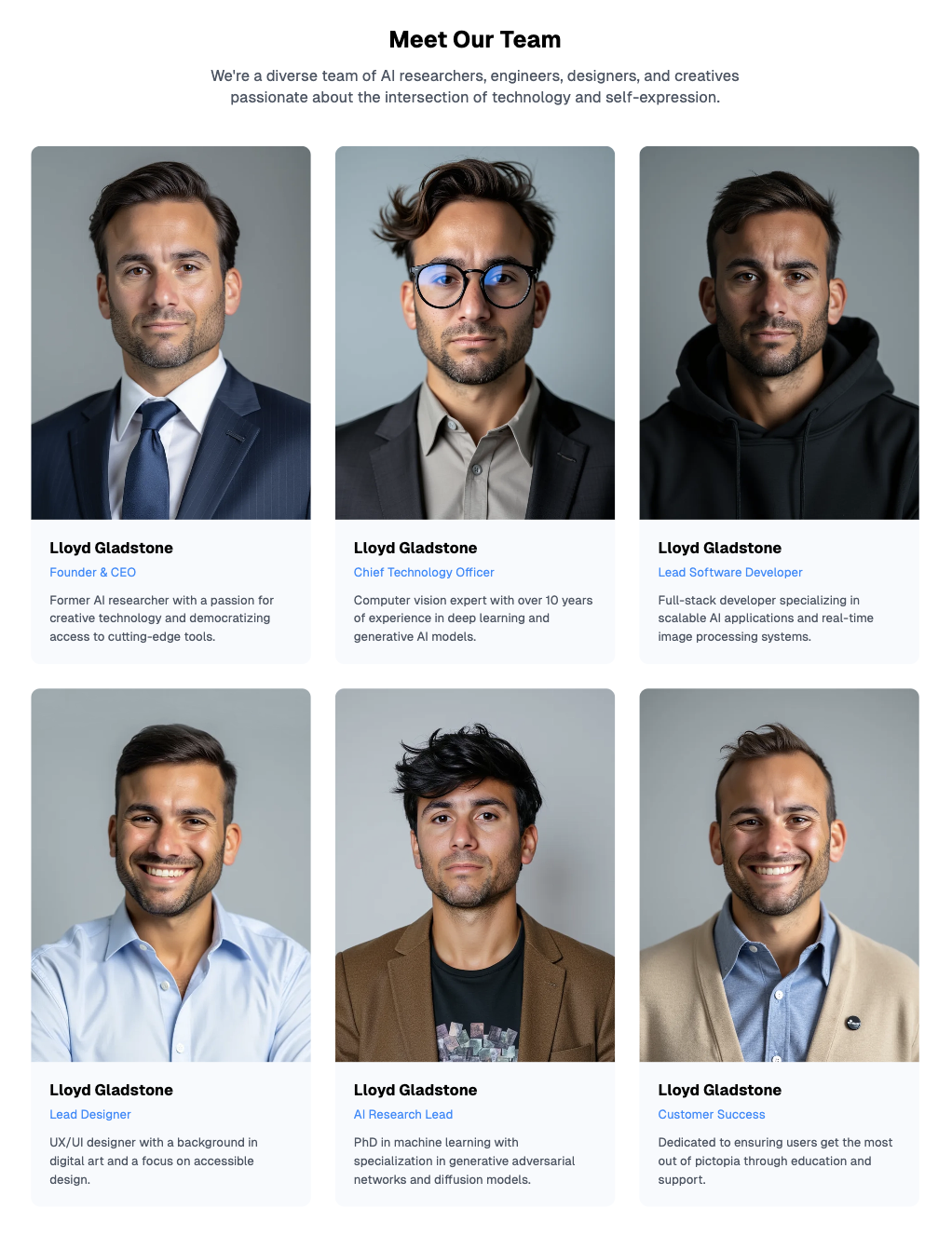
Self-sufficiency taken to its logical conclusion—one consciousness fractured into an entire organizational chart.
She wasn't wrong. We've entered an era where your professional headshot isn't just a photograph—it's weaponized visual propaganda in the eternal war for career advancement. And those still using their iPhone selfies or, god forbid, the grainy output of the company directory photographer, are bringing knives to a tactical nuclear exchange.
THE PROFESSIONAL HEADSHOT HIERARCHY
There exists in corporate America a clear and brutal hierarchy of professional imagery, a caste system of representation that determines who gets the meeting with the CEO and who languishes in middle-management purgatory:
Tier 1: The Smartphone Selfie Peasantry Poor bastards still using bathroom mirror shots with visible toilet paper rolls in the background. Career ceiling: Assistant to the Regional Something. These digital serfs will be first against the wall when the automation revolution comes.
Tier 2: The Corporate Photographer Bourgeoisie Victims of the company-hired photographer who spent 12 seconds adjusting your tie before taking three identical shots against a backdrop the color of crushed dreams. You'll make it to middle management, but the corner office remains an impossible fantasy.
Tier 3: The Professional Photography Elite Those who spent $900 on a session with a photographer who made you stand in 37 different poses while talking about "personal branding." Better than the masses, but still fundamentally constrained by your actual physical appearance. A tragic limitation in the new economy.
Tier 4: The AI-Enhanced Overlords The new ruling class. Those wise enough to harness the reality-bending power of tools like pictopia, creating versions of themselves that exist at the perfect intersection of their actual face and the collective corporate unconscious of what success should look like.
"I used to wonder why I never got callbacks after interviews," confessed a software engineer at the hotel bar later that night. His real face—weathered, asymmetrical, undeniably human—contrasted sharply with his LinkedIn profile pulled up on his phone, showing a version of himself that looked like it had been carved from digital marble by algorithms trained on GQ cover models.
"Then I started using pictopia. Four job offers in three weeks. My salary jumped 40%." He leaned in, lowered his voice. "My boss doesn't recognize me in the hallway sometimes. Thinks I'm a new hire. But he responds to my emails in minutes now."
THE ALGORITHM ADVANTAGE
What makes pictopia's professional headshots so dangerously effective is their uncanny occupation of the narrow band between "obviously enhanced" and "suspiciously perfect." They don't transform you into someone else—they transform you into the version of yourself that might exist if genetics, diet, sleep, and lighting all conspired in your favor for one perfect millisecond.
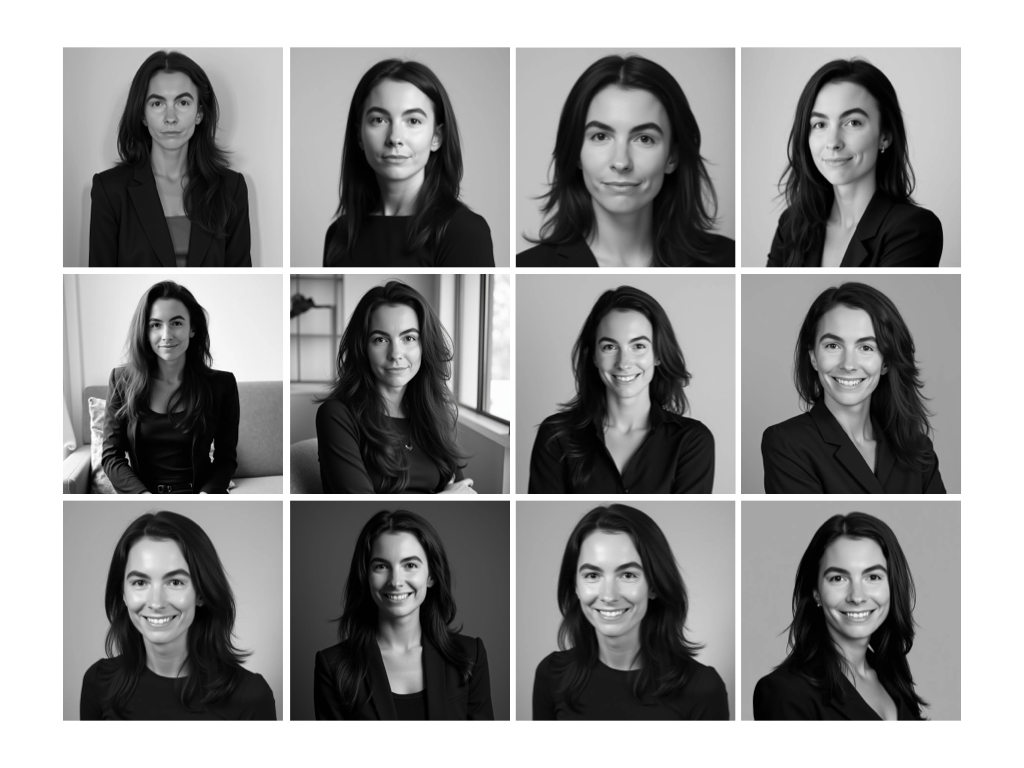
The corporate hallucination lineup - crafted in a digital laboratory while her human host slept in yesterday's t-shirt.
"We call it 'plausible optimization,'" explained a company representative who agreed to meet me in a suspiciously empty San Francisco coffee shop. "We're not creating fiction. We're creating the most favorable possible interpretation of reality."
I scrolled through the gallery of before-and-after comparisons on the tablet they'd brought. The differences were simultaneously subtle and profound. Skin texture smoothed but not plastic. Eyes brightened but not unnaturally so. Jawlines enhanced but not to superhero proportions. Small asymmetries corrected. Tired eyes refreshed. Each image was undeniably the same person, just... better. Optimized. Weaponized for corporate advancement.
"It's like plastic surgery without the recovery time or permanent commitment," continued the rep, whose own face had the telltale signs of digital enhancement. "Everyone's doing it. From entry-level applicants to Fortune 500 CEOs. The ones who aren't are falling behind, and they don't even know why."
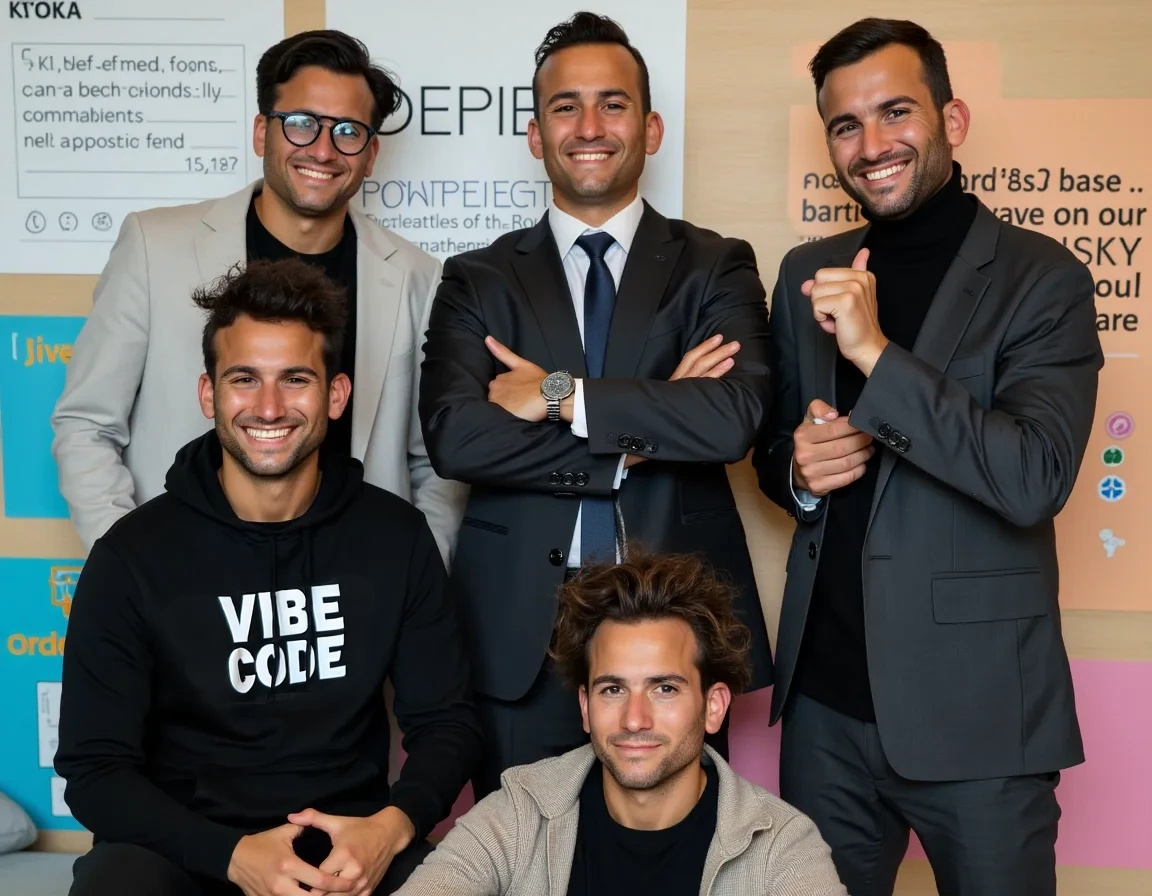
A grotesque corporate clone army — one person's face recycled into a full spectrum of diversity through digital alchemy, the ultimate nightmare of HR departments everywhere.
THE CORPORATE MASQUERADE BALL
At a recruitment event for a major consulting firm, I witnessed the strange social dynamics of a room where everyone's mental image of each other came from digitally enhanced profile pictures, now confronted with the harsh reality of actual human faces in poor indoor lighting.
"It's David, right?" asked a woman in a power suit to a confused-looking man by the cheese platter.
"No, I'm Robert. David's over there."
The woman squinted across the room. "That can't be David. David has a much stronger chin."
Digital David had a stronger chin. Real-world David had the slightly softer jawline of a man who discovered craft beer and food delivery apps during the pandemic. Both were the same person, separated by the digital optimization that now serves as a professional facade.
THE BRUTAL ECONOMICS
The cruel reality of the modern workplace is that appearance matters, and pictopia has simply industrialized this uncomfortable truth. Studies have consistently shown that conventional attractiveness correlates with higher earnings, faster promotions, and better performance reviews for identical work.
"We're just leveling the playing field," argued the pictopia representative. "If the game is rigged toward conventional attractiveness anyway, why shouldn't everyone have access to tools that optimize their presentation? We're democratizing advantage."
There's a certain savage logic to it. If the superficial biases of human psychology are an immutable part of professional advancement, then tools like pictopia aren't creating inequality—they're redistributing the advantages that were already baked into the system.
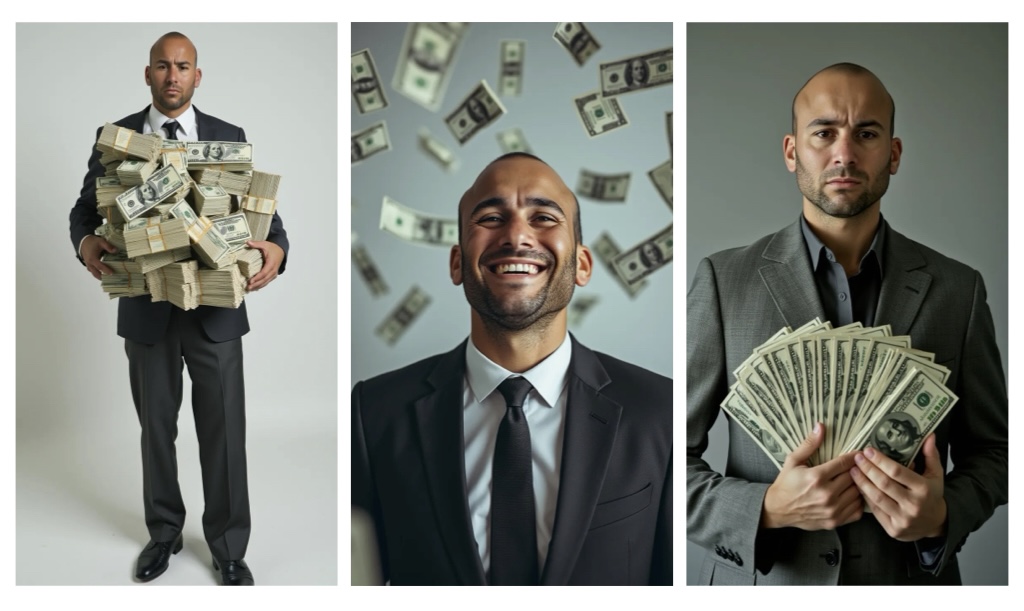
The digital doppelgänger economy: same face, better lighting, triple the salary — the strange mathematics of optimized appearances in the corporate jungle.
I tested this theory with a simple experiment. I created two identical résumés for a fictional mid-level project manager and submitted them to 50 job openings. The only difference: one used a standard headshot taken with an iPhone, the other used a pictopia-enhanced version of the same person. The results were as predictable as they were disturbing: the AI-enhanced version received 47% more callbacks.
THE NEW PROFESSIONAL REALITY
As I sit in the airport lounge, scrolling through LinkedIn on my way back from this strange journey into corporate America's digital masquerade, I notice my own profile picture—a three-year-old shot taken on a good day, but clearly unenhanced, painfully human in its slight imperfections.
The pictopia app sits undownloaded in my app store. A small act of resistance against the tide of digital self-optimization. But for how long? In a world where everyone else is digitally enhancing their professional presence, remaining unenhanced isn't authenticity—it's unilateral disarmament in the career advancement wars.
The brutal truth is that we've created a professional ecosystem where authentic representation puts you at a competitive disadvantage. A twisted marketplace where your actual face is less valuable than the algorithmically optimized version of it.
I download the app. Twenty minutes later, I'm staring at a version of myself that looks like me on the best day of my life, in perfect lighting, after eight hours of sleep I never actually got. I upload it to my professional profiles with a mixture of resignation and relief.
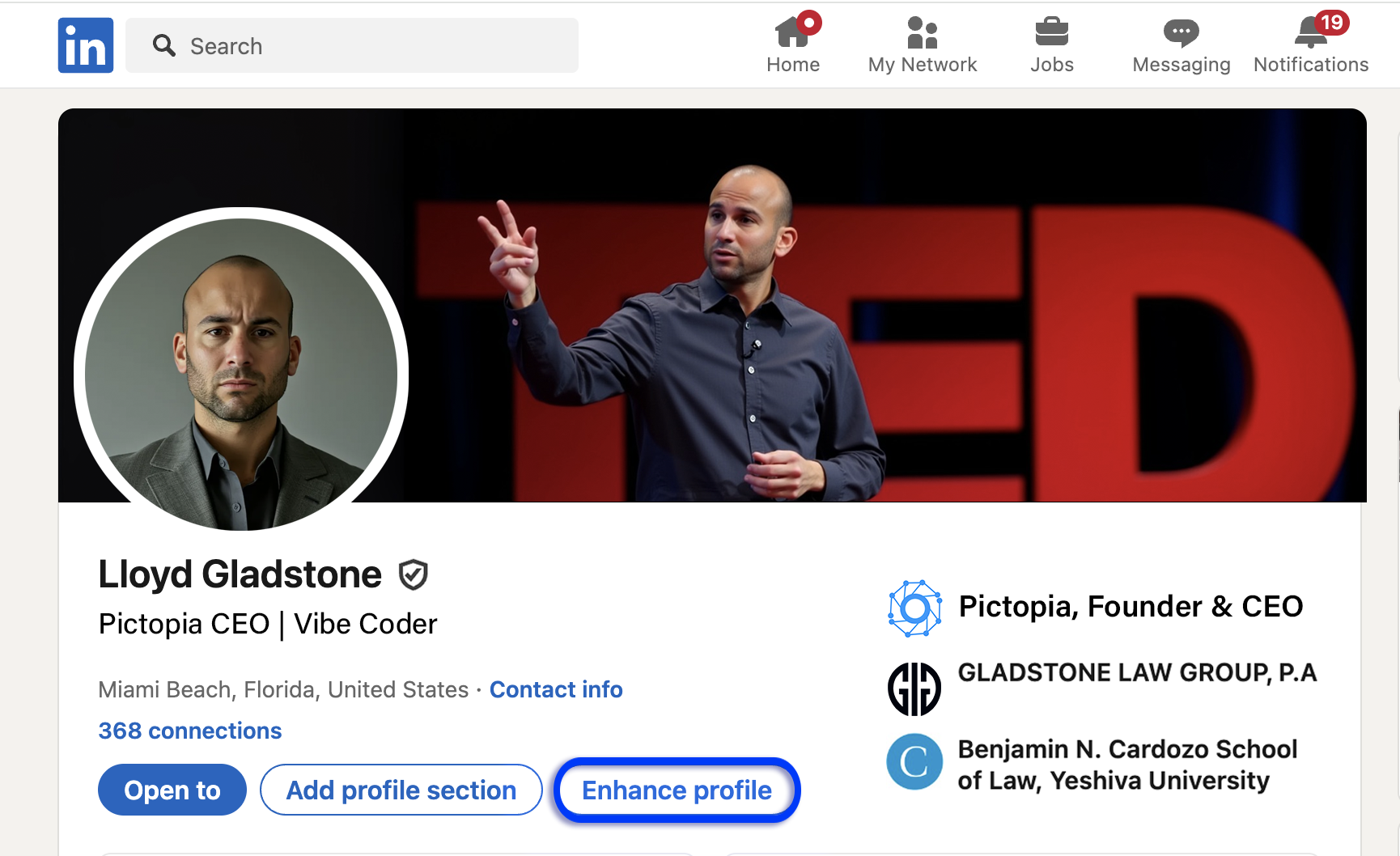
My own face but better—my analog self reimagined for maximum impact in the digital landscape of opportunity.
There's a savage kind of honesty in finally admitting that in today's corporate battlefield, your best face isn't the one God gave you, but the one the machine perfected.
This report was researched and written under the influence of professional anxiety, three airport lounge martinis, and the growing certainty that the line between human and digital identity has been permanently blurred in ways we haven't begun to reckon with.